
Name__________________________________________Date______________________
Reading Comprehension
Volume 6, Number 6, October 16, 2000
www.rhlschool.com
 Many people are
closely following the political polls during the
final weeks preceding this important election. But
how do these polls actually work?
Many people are
closely following the political polls during the
final weeks preceding this important election. But
how do these polls actually work?
Polls are surveys
of a relatively small number of people compared to the actual number
who will vote. They are an attempt to determine
who may actually win an election in advance of the final vote.
Let’s
say that 100 million people are expected to vote in the general
election. If 100 people are asked for their opinions, each respondent
represents a million voters. Obviously,
the results of such a poll are not very reliable.
The more people surveyed, the more meaningful are the results.
Pollsters have
various ways of making their polls more accurate.
They try to find a representative variety of people to question. For
example, they look for people with similar backgrounds and from similar
regions to those of all the voters.
Pollsters also ask
questions that try to determine how many people who support each
candidate will actually vote. If a candidate has a higher percentage of
enthusiastic supporters than his opponent, he has a
better chance of winning than the simple numbers might suggest.
Pollsters may only count those who they consider to be
“likely voters.”
If we look at
polls that are taken over time, we can often detect
a trend. We can tell if a candidate is gaining or
losing support when we compare the most recent poll to earlier ones.
Polls often ask
potential (those who could be) voters what they like or dislike about
each candidate. The campaigns use those results to help them decide
which issues to stress or which positions to clarify.
They can also determine which voters to target with their messages.
Because no two
people are the same, polls can never be perfect predictors of the real
vote. But they can give important clues as to where things may be
heading. At the very least, if you like politics, polls can be great
entertainment.
Solve the puzzle using the highlighted words from the article.
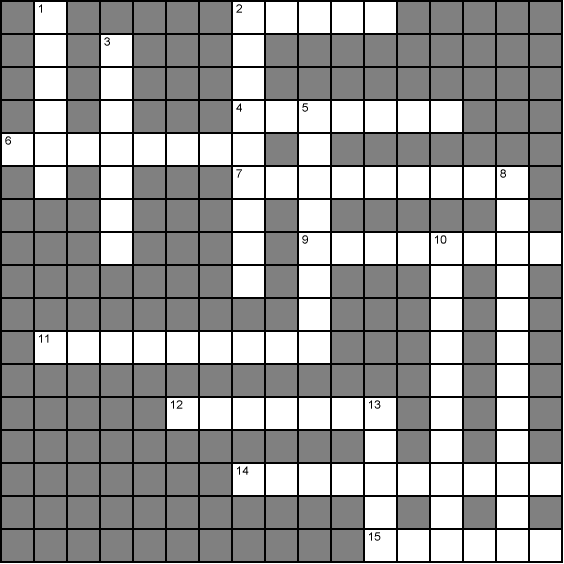
| Across
2. Surveys
|
Down
1. Matters of discussion
|
Puzzle created by Crossword Compiler.
rhlschool.com.RHL School - Free Worksheets and MoreCopyright 2000 RHL
|
|
Tweet | G |  Delicious Delicious
|